
Description
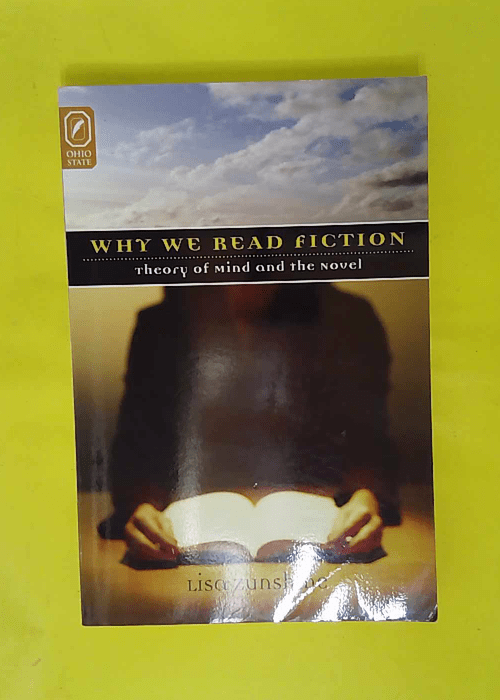
Résumé : Why We Read Fiction Offers A Lucid Overview Of The Most Exciting Area Of Research In Contemporary Cognitive Psychology Known As Theory Of Mind And Discusses Its Implications For Literary Studies. It Covers A Broad Range Of Fictional Narratives From Richardson S Clarissa Dostoyevski s Crime And Punishment And Austen S Pride And Prejudice To Woolf s Mrs. Dalloway Nabokov s Lolita And Hammett S The Maltese Falcon. Zunshine s Surprising New Interpretations Of Well-known Literary Texts And Popular Cultural Representations Constantly Prod Her Readers To Rethink Their Own Interest In Fictional Narrative. Written For A General Audience This Study Provides A Jargon-free Introduction To The Rapidly Growing Interdisciplinary Field Known As Cognitive Approaches To Literature And Culture. Pt. 1. Attributing Minds. Why Did Peter Walsh Tremble? — What Is Mind-reading (also Known As Theory Of Mind)? — Theory Of Mind Autism And Fiction : Four Caveats — Effortless Mind-reading — Why Do We Read Fiction? — The Novel As A Cognitive Experiment — Can Cognitive Science Tell Us Why We Are Afraid Of Mrs. Dalloway? — The Relationship Between A Cognitive Analysis Of Mrs. Dalloway And The Larger Field Of Literary Studies — Woolf Pinker And The Project Of Interdisciplinarity — Pt. 2. Tracking Minds. Whose Thought Is It Anyway? — Metarepresentational Ability And Schizophrenia — Everyday Failures Of Source-monitoring — Monitoring Fictional States Of Mind — Fictional And History — Tracking Minds In Beowulf — Don Quixote And His Progeny — Source-monitoring Tom And The Figure Of The Unreliable Narrator — Source-monitoring And The Implied Author — Richardson s Clarissa : The Progress Of The Elated Bridegroom — Nabokov s Lolita : The Deadly Demon Meets And Destroys The Tenderhearted Boy — Pt. 3. Concealing Minds. Tom And The Detective Novel : What Does It Take To Suspect Everybody? — Why Is Reading A Detective Story A Lot Like Lifting Weights At The Gym? — Metarepresentationality And Some Recurrent Patterns Of The Detective Story — A Cognitive Evolutionary Perspective : Always Historicize! — Conclusion : Why Do We Read (and Write) Fiction? Authors Meet Their Readers — Is This Why We Read Fiction? Surely There Is More To It! Lisa Zunshine. Includes Bibliographical References (p. 165-192) And Index..







Avis
Il n’y a encore aucun avis